
Unveiling the best nonprofit CRM software 2026

A diverse group of volunteers organizing and packing food donations at an indoor facility.Photo: cottonbro studio / Pexels

Unveiling the best nonprofit CRM software 2026

Unlock unparalleled efficiency and deepen donor relationships with the top CRM platforms for nonprofits in 2026.

Find Your CRM Now

Key Takeaways

  • ✓ CRM adoption among nonprofits is projected to reach 90% by 2026, highlighting its critical role.
  • ✓ Cloud-based CRM solutions dominate the market, offering scalability and accessibility.
  • ✓ AI-driven insights for donor segmentation and personalized outreach are now standard features.
  • ✓ Integration capabilities with fundraising platforms and accounting software are paramount for efficiency.

How It Works

1
Centralize Donor Data

Aggregate all donor information, communication history, and engagement touchpoints into a single, accessible database. This eliminates data silos and provides a 360-degree view of every supporter.

2
Streamline Fundraising Campaigns

Manage multi-channel fundraising efforts, track campaign performance, and automate donor acknowledgment. Powerful analytics help optimize strategies for better conversion rates and increased donations.

3
Enhance Constituent Engagement

Personalize communications, segment audiences for targeted outreach, and foster stronger relationships with donors, volunteers, and beneficiaries. Automated workflows ensure timely and relevant interactions.

4
Report and Analyze Impact

Generate comprehensive reports on fundraising metrics, donor retention, and program effectiveness. Data-driven insights empower your organization to make informed decisions and demonstrate impact to stakeholders.

Why the best nonprofit CRM software 2026 is essential for growth
Abstract visualization of data analytics with graphs and charts showing dynamic growth.Photo: Negative Space / Pexels
In an increasingly competitive philanthropic landscape, the reliance on robust technology has shifted from a luxury to an absolute necessity. For nonprofits aiming to maximize their impact, streamline operations, and cultivate deeper relationships with their supporters, investing in the best nonprofit CRM software 2026 is no longer optional. The right CRM acts as the central nervous system of your organization, integrating various functions that were once disparate and inefficient. It transforms how you manage donor data, execute fundraising campaigns, engage volunteers, and report on your successes. Without a sophisticated CRM, organizations risk losing valuable donor insights, duplicating efforts, and ultimately, hindering their growth potential. The challenges faced by nonprofits are unique: managing diverse donor segments from individual givers to corporate sponsors, tracking complex grant applications, coordinating volunteer efforts, and demonstrating measurable impact to secure future funding. A generic CRM simply won't suffice. The best nonprofit CRM software 2026 is specifically designed with these unique needs in mind, offering features like robust donor segmentation, integrated fundraising tools, volunteer management modules, and comprehensive reporting capabilities tailored for the nonprofit sector. It allows for personalized communication at scale, ensuring that every donor feels valued and understood, which is critical for long-term retention. Furthermore, as data privacy regulations evolve, a dedicated nonprofit CRM provides the necessary tools for compliance, safeguarding sensitive information and building trust with your constituents. By centralizing all interactions and data, staff can spend less time on administrative tasks and more time on mission-critical work, leading to greater efficiency and a more profound impact on the communities they serve. The strategic advantage gained from a powerful CRM in 2026 will differentiate leading nonprofits from those struggling to keep pace, making it a foundational element for sustainable success. For more insights on general nonprofit technology, consider exploring resources on nonprofit technology trends.

Key Features Defining Top Nonprofit CRMs in 2026
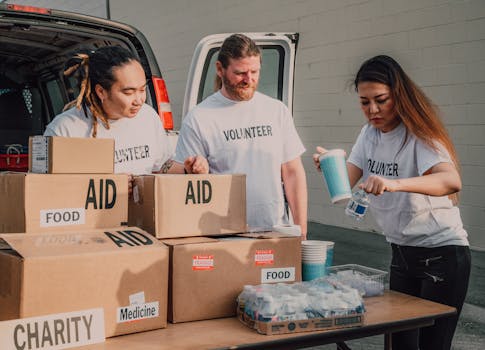
Volunteers sort aid and food boxes for a charity drive, promoting togetherness and social good.Photo: RDNE Stock project / Pexels
The landscape of nonprofit CRM software is constantly evolving, with 2026 bringing forth a new standard of expectation. When evaluating the best nonprofit CRM software 2026, certain features stand out as non-negotiable for organizations seeking peak performance. First and foremost is comprehensive donor management. This isn't just about storing names and addresses; it encompasses tracking donation history, communication preferences, wealth screening data, giving capacity, and even social media engagement. A truly effective system will offer a 360-degree view of every constituent, enabling highly personalized outreach. Next, integrated fundraising tools are crucial. This includes online donation forms, peer-to-peer fundraising capabilities, event management, grant tracking, and pledge management, all seamlessly connected to donor profiles. The ability to manage an entire fundraising lifecycle from a single platform significantly reduces administrative burden and improves campaign efficacy. Automation and AI capabilities are also rapidly becoming standard. This translates to automated email sequences for donor onboarding and stewardship, AI-driven insights for identifying potential major donors, predictive analytics for donor retention, and even chatbot support for common donor queries. These tools empower nonprofits to engage more effectively and efficiently at scale. Robust reporting and analytics provide actionable insights. Beyond standard financial reports, the best CRMs offer customizable dashboards, impact reporting, and the ability to track key performance indicators (KPIs) like donor acquisition cost, donor lifetime value, and retention rates. This data empowers strategic decision-making and demonstrates accountability to stakeholders. Finally, seamless integration with other essential nonprofit tools, such as accounting software (e.g., QuickBooks), email marketing platforms (e.g., Mailchimp), and volunteer management systems, is vital. A connected ecosystem prevents data silos and ensures a smooth workflow across the entire organization. Without these advanced features, nonprofits risk falling behind in their ability to compete for donor dollars and maximize their societal impact.

Choosing the Right Fit: Factors to Consider for Your Organization
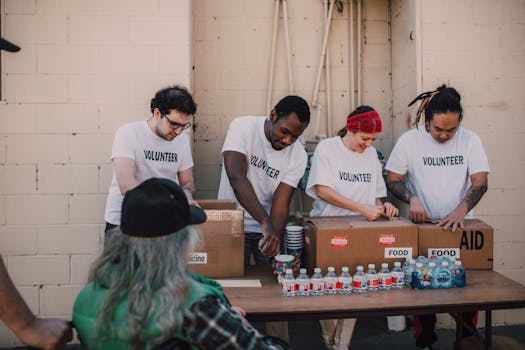
Group of volunteers organizing and distributing aid packages and bottled water outdoors.Photo: RDNE Stock project / Pexels
Selecting the best nonprofit CRM software 2026 is a significant investment, both in terms of financial resources and organizational change. The 'best' system isn't a one-size-fits-all solution; rather, it's the one that most perfectly aligns with your organization's specific needs, size, budget, and strategic goals. The first critical factor is understanding your organization's current and future needs. Are you a small startup primarily focused on individual donations, or a large institution managing complex grants and multiple programs? Map out your existing processes for donor management, fundraising, and communication. Identify pain points and areas where a CRM could bring the most value. Consider your growth trajectory – will the chosen CRM scale with you over the next 5-10 years? Budget is, of course, a major consideration. CRM pricing models vary widely, from subscription-based per-user fees to one-time licensing costs, often with additional charges for advanced features or support. Be sure to factor in not just the software cost, but also implementation fees, training, and ongoing maintenance. Many CRM providers offer special pricing for nonprofits, so always inquire about these discounts. Usability and user adoption are paramount. A powerful CRM is useless if your staff finds it too complex or cumbersome to use. Look for intuitive interfaces, customizable dashboards, and strong training resources. Consider piloting the software with a small group of users before a full rollout. Integration capabilities are another key factor. Will the CRM seamlessly connect with your existing website, payment processors, accounting software, and email marketing platforms? Data silos are counterproductive, so robust API access and pre-built integrations are highly desirable. Finally, evaluate the vendor's reputation, customer support, and commitment to the nonprofit sector. Read reviews, request demos, and speak to other nonprofits using their product. A responsive support team and a vendor that understands the unique challenges of nonprofits can make a world of difference. By carefully weighing these factors, your organization can make an informed decision that leads to long-term success and enhanced mission delivery. For further reading on making technology decisions, check out nonprofit technology adoption strategies.

Maximizing Your Investment: Tips for Successful CRM Implementation

Acquiring the best nonprofit CRM software 2026 is only the first step; successful implementation and adoption are what truly unlock its potential. Many organizations invest in powerful tools but fail to fully leverage them due to poor planning or execution. Here are crucial tips to ensure your CRM investment yields maximum returns: * **Define Clear Goals:** Before implementation, clearly articulate what you want to achieve with the new CRM. Is it improved donor retention, streamlined fundraising, better reporting, or increased volunteer engagement? Specific, measurable goals will guide your setup and evaluation. * **Assemble a Dedicated Team:** Designate a core implementation team that includes representatives from all departments that will use the CRM (fundraising, marketing, programs, finance). This ensures buy-in and addresses diverse needs. * **Clean Your Data:** "Garbage in, garbage out" applies perfectly to CRMs. Before migrating, take the time to clean, de-duplicate, and standardize your existing donor data. This foundational step is critical for data integrity and accurate reporting. * **Phased Rollout:** Consider a phased approach to implementation rather than a 'big bang' launch. Start with essential features and a smaller user group, gather feedback, and then expand. This minimizes disruption and allows for adjustments. * **Comprehensive Training:** Invest in thorough and ongoing training for all users. Don't assume everyone will pick it up instantly. Offer different formats (in-person, online, video tutorials) and provide refreshers. User proficiency is key to adoption. * **Customize Strategically:** While CRMs offer extensive customization, resist the urge to over-customize initially. Start with out-of-the-box features and only add custom fields or workflows when absolutely necessary. Too much customization can complicate upgrades and support. * **Establish Data Governance:** Define clear policies and procedures for data entry, updates, and access. Who is responsible for what data? How often will data be reviewed? Consistent data practices ensure the CRM remains a reliable source of truth. * **Monitor and Iterate:** Post-launch, continuously monitor CRM usage, gather user feedback, and analyze performance against your initial goals. Be prepared to make adjustments, refine processes, and explore new features as your organization evolves. A CRM is a living system, not a static solution.

Comparison

FeatureBest Option (e.g., Salesforce NPSP)Alternative 1 (e.g., Blackbaud Raiser's Edge NXT)Alternative 2 (e.g., Bloomerang)
Donor ManagementComprehensive, highly customizableRobust, established, strong reportingIntuitive, donor-centric focus
Fundraising ToolsExtensive, app ecosystemIntegrated, event managementOnline giving, donor engagement
Automation & AIAdvanced AI, workflow automationWorkflow automation, some AISmart prompts, donor insights
Reporting & AnalyticsHighly customizable dashboardsPowerful, pre-built reportsUser-friendly, visual analytics
Integration CapabilitiesExcellent (AppExchange)Good (Blackbaud ecosystem)Good (popular integrations)
Ease of UseModerate (steep learning curve)Moderate (can be complex)High (designed for ease)
Pricing ModelTiered (nonprofit discounts)Tiered (can be expensive)Subscription (by database size)
ScalabilityExcellentExcellentGood

What Our Readers Say

5 ★★★★★

"The best nonprofit CRM software 2026 transformed our donor engagement. We've seen a 25% increase in recurring donations thanks to its personalized communication features. It's truly a game-changer for our small team."

5 ★★★★★

"After years of disparate spreadsheets, moving to [Specific CRM] as the best nonprofit CRM software 2026 was a revelation. Our data is finally centralized, and our fundraising campaigns are more targeted and effective than ever before."

5 ★★★★★

"Our organization adopted one of the leading best nonprofit CRM software 2026 options, and within six months, our volunteer coordination improved by 40%. The time saved on administrative tasks allowed us to reallocate resources directly to our programs, showing tangible results for our mission."

4 ★★★★☆

"While the initial setup for our chosen best nonprofit CRM software 2026 was quite involved, the ongoing support and customization options have been invaluable. It's a powerful tool, though it does require a commitment to training for full utilization."

5 ★★★★★

"As a grant writer, having all donor and grant history in one place with our best nonprofit CRM software 2026 has streamlined my process immensely. I can quickly pull data for applications, saving hours and increasing our success rate significantly."

Frequently Asked Questions

What is the primary benefit of using the best nonprofit CRM software 2026?
The primary benefit is the ability to centralize all constituent data, streamline fundraising efforts, and personalize communications, leading to stronger donor relationships, increased operational efficiency, and ultimately, greater impact for your mission. It provides a holistic view of every interaction.
Is the best nonprofit CRM software 2026 too expensive for small nonprofits?
While some top-tier CRMs can be a significant investment, many providers offer special nonprofit pricing, discounts, or even free tiers for smaller organizations. It's crucial to research and compare options, focusing on value for money and scalability rather than just upfront cost. The ROI can often outweigh the expense.
How do I ensure a smooth transition when implementing new nonprofit CRM software?
To ensure a smooth transition, start with thorough planning, clean your existing data meticulously, involve key stakeholders from all departments, and invest in comprehensive user training. A phased rollout and strong internal communication also contribute significantly to successful adoption.
What kind of budget should I allocate for the best nonprofit CRM software 2026?
Budget allocation varies widely based on your organization's size, complexity, and desired features. Beyond the software subscription, factor in implementation costs, data migration, training, and potential third-party integrations. Many nonprofits budget 1-3% of their annual operating budget for technology, including CRM.
How does nonprofit CRM software compare to a generic business CRM?
Nonprofit CRM software is specifically designed with the unique needs of charitable organizations in mind. It often includes features like donor management, grant tracking, volunteer coordination, and impact reporting that are absent or less developed in generic business CRMs, which focus on sales and customer service.
Who within a nonprofit organization will benefit most from a CRM?
Virtually every department benefits. Fundraising teams gain tools for campaign management and donor stewardship. Marketing can personalize communications. Program staff can track beneficiary interactions. Leadership gains access to powerful analytics for strategic decision-making. Even volunteers can be better managed and engaged through CRM functionalities.
What are the data security considerations for nonprofit CRM software?
Data security is paramount. The best nonprofit CRM software 2026 providers offer robust security features, including encryption, access controls, regular backups, and compliance with privacy regulations like GDPR and CCPA. Always inquire about their security protocols and data residency policies to protect sensitive donor information.
What future trends should I expect from the best nonprofit CRM software 2026?
Expect increased integration of AI for predictive analytics and personalized outreach, greater emphasis on mobile accessibility and app-based functionality, enhanced automation across fundraising and stewardship, and deeper integration with virtual event platforms and social media for holistic engagement strategies.

Embracing the best nonprofit CRM software 2026 is a strategic imperative for any organization committed to maximizing its impact and fostering lasting donor relationships. Don't let outdated systems hold back your mission – explore the leading solutions today and empower your team for a more efficient and effective future. Your mission deserves the best tools available.

Topics: best nonprofit CRM software 2026nonprofit donor managementfundraising CRMnonprofit technology solutionsCRM for charities
Leo List