Documentation needed for car rental Italy: Your Essential Guide
Documentation needed for car rental Italy

Documentation needed for car rental Italy: Your Essential Guide

Navigate the roads of Italy with confidence by understanding all the required paperwork for a hassle-free car rental experience.

Plan Your Italian Road Trip

Key Takeaways

  • ✓ An International Driving Permit (IDP) is legally required for non-EU drivers.
  • ✓ Your valid US driver's license must always accompany your IDP.
  • ✓ A major credit card in the primary driver's name is essential for rental deposits.
  • ✓ Always carry your passport for identification alongside rental documents.

How It Works

1
Gather Your Core Documents

Ensure you have your valid US driver's license and passport ready. These are fundamental for any car rental in Italy.

2
Obtain Your International Driving Permit (IDP)

Apply for an IDP through AAA or AATA in the US before your trip. This is a mandatory legal requirement for driving in Italy.

3
Secure a Valid Credit Card

Make sure the primary driver has a major credit card with sufficient credit limit for the rental deposit. Debit cards are generally not accepted for this purpose.

4
Understand Rental Agreement Details

Read your rental agreement carefully, paying attention to insurance coverage, fuel policies, and any additional driver requirements. Clarify any doubts before signing.

The Indispensable International Driving Permit (IDP) for Italy

Blue parking signs in a row against a modern architectural wall, creating an urban and geometric pattern. Photo: Jan van der Wolf / Pexels
When planning your dream road trip through the picturesque landscapes of Italy, perhaps stopping to explore ancient ruins or savoring authentic pasta in a quaint village, one document stands out as absolutely non-negotiable for non-EU citizens: the International Driving Permit (IDP). Many US travelers often overlook this crucial piece of paper, assuming their valid US driver's license is sufficient. However, Italian law explicitly mandates that all non-EU drivers must carry an IDP alongside their domestic driver's license. This isn't just a suggestion; it's a legal requirement, and failure to present one can result in significant fines, ranging from hundreds to over a thousand euros, and even potential issues with your car rental agency or insurance coverage in the event of an accident. An IDP is essentially a translation of your domestic driver's license into multiple languages, verifying that you are legally permitted to drive in your home country. It is not a standalone license; it must always be presented in conjunction with your valid US driver's license. Think of it as a universal translator for your driving credentials. Obtaining an IDP is a straightforward process in the United States. You can apply for one through either the American Automobile Association (AAA) or the American International Automobile Association (AATA). Both organizations are authorized by the U.S. Department of State to issue IDPs. The application typically requires your valid US driver's license, two passport-sized photographs, and a small application fee. It's highly recommended to apply for your IDP well in advance of your departure, ideally a few weeks, to ensure it arrives in time. The IDP is valid for one year from its date of issue, so check the expiration date if you've obtained one previously. Remember, without this document, many car rental agencies in Italy may refuse to release a vehicle to you, or you could face severe penalties if stopped by Italian authorities. This is a fundamental step in ensuring a smooth and legal driving experience in Italy. For more tips on international travel, check out our guide on traveling smart abroad.

Essential Personal Identification and Financial Requirements
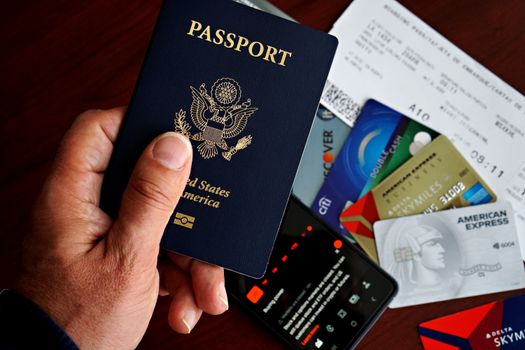
US passport with credit cards and travel documents on a table, travel preparation concept. Photo: DΛVΞ GΛRCIΛ / Pexels
Beyond the indispensable International Driving Permit, several other critical documents and financial instruments are absolutely necessary for a successful car rental experience in Italy. First and foremost, your valid US driver's license is paramount. As mentioned, the IDP is merely a translation; your actual driving authority stems from your domestic license. Ensure your license is current and will not expire before or during your rental period. It's also wise to check the issue date, as some rental companies require you to have held your license for a minimum period, often one or two years. Next, your passport is an absolute must-have. This serves as your primary form of identification as a foreign national and is required not only by the car rental agency but also for general travel and legal compliance in Italy. Always carry your physical passport with you, not just a copy, as authorities may request it. The financial aspect of car rental is equally important. A major credit card in the primary driver's name is universally required. This credit card will be used to hold a security deposit, which can be a substantial amount, often ranging from several hundred to over a thousand euros, depending on the vehicle type and rental company. It's crucial to ensure your credit card has a sufficient credit limit to cover this deposit, as it will be temporarily blocked. Debit cards are generally not accepted for security deposits, even if they have a Visa or Mastercard logo. While you might be able to pay for the rental itself with a debit card at some agencies, the deposit almost always requires a credit card. Without a valid credit card for the deposit, you will likely be denied the rental, regardless of how many other documents you possess. Finally, keep all your reservation confirmations and rental vouchers readily accessible. Whether printed or on your smartphone, these documents contain vital information about your booking, including rental dates, vehicle type, pick-up location, and any pre-paid services. Having these organized will streamline the pick-up process and help resolve any discrepancies quickly. Understanding these core requirements ensures you're not caught off guard, allowing you to focus on enjoying the stunning Italian scenery and cultural richness. Planning ahead for these documents is as important as planning your itinerary.

Our partners at Noleggio auto in Italia offer related services.

Navigating Insurance, Age Restrictions, and Additional Driver Policies

Two men help an elderly person with a walker get out of a car outdoors. Photo: RDNE Stock project / Pexels
Understanding the nuances of insurance, age restrictions, and policies for additional drivers is critical when securing your car rental in Italy, preventing unexpected costs or complications. Italian law requires all vehicles to have basic third-party liability insurance, which is typically included in your rental rate. However, this basic coverage often has a high deductible (excess) and only covers damages to other vehicles or property, not your rental car. Therefore, it's highly recommended to consider additional coverage options. Rental companies will offer Collision Damage Waiver (CDW) and Theft Protection (TP), often with varying levels of deductible reduction. While these reduce your financial liability, they are not full insurance and usually exclude certain parts of the car (tires, windows, undercarriage). Before purchasing additional insurance from the rental agency, check if your personal car insurance policy, premium credit card benefits, or travel insurance already provide coverage for rental cars abroad. Many US credit cards offer secondary CDW coverage, meaning it kicks in after your primary insurance. Be sure to confirm the specifics of your coverage, including geographical limitations and exclusions, with your provider before you travel. If you decline the rental company's CDW/TP and rely on external coverage, be prepared that the rental company may place a much larger security deposit hold on your credit card. Age restrictions are another significant factor. Most car rental companies in Italy require drivers to be at least 21 years old. However, for drivers under 25, a 'young driver's surcharge' is almost universally applied, which can add a significant daily fee to your rental cost. Some premium or larger vehicle categories might even have higher minimum age requirements (e.g., 25 or 30). Conversely, there can also be upper age limits, typically around 70 or 75, after which a 'senior driver's surcharge' might apply or a medical certificate could be requested. Always verify the specific age policies with your chosen rental company before booking. Finally, if you plan for multiple people to drive the rental car, each additional driver must be listed on the rental agreement. Failing to do so can void your insurance coverage if an unauthorized driver is involved in an accident. Each additional driver will need to present their valid US driver's license and IDP at the time of pick-up, and an 'additional driver fee' is typically charged per day. Transparency and upfront communication with the rental agency about all drivers are essential for a worry-free experience. For more detailed insights into travel planning, explore our resources on responsible tourism.

Key Considerations: ZTLs, Fuel Policies, and Vehicle Inspection Tips

Person holding a sign reading 'Volunteers Needed' to encourage community support. Photo: Julia M Cameron / Pexels
Beyond the mandatory documentation, understanding Italy's unique driving regulations, fuel policies, and best practices for vehicle inspection are crucial for a smooth car rental experience. One of the most common pitfalls for tourists driving in Italy is the Zona a Traffico Limitato, or ZTL. These are restricted traffic zones, prevalent in historic city centers, where only authorized vehicles (residents, public transport, delivery vehicles) are allowed at certain times. They are monitored by cameras, and unauthorized entry results in hefty fines, often received months after your trip. Rental cars are not exempt. Pay close attention to ZTL signs – a white circle with a red border – and avoid driving into these areas unless specifically instructed by your accommodation that they will register your license plate. Fuel policies can significantly impact your total rental cost. The most common policy is 'full-to-full,' meaning you pick up the car with a full tank and must return it full. This is generally the most economical option. 'Full-to-empty' policies, where you pre-pay for a full tank and return it empty, often involve inflated fuel prices and you rarely return it perfectly empty, leading to wasted money. Always clarify the fuel policy before leaving the rental counter. Also, be aware of fuel types: 'Benzina' is gasoline, 'Diesel' is diesel. Do not confuse them; putting the wrong fuel in the tank can lead to expensive repairs. Before driving off, conduct a thorough inspection of the vehicle. Document any existing scratches, dents, or damage, no matter how minor, with photos or videos. Ensure these are noted on the rental agreement before you sign. Check the functionality of lights, wipers, and air conditioning. Locate the spare tire kit and familiarize yourself with the dashboard indicators. This meticulous inspection protects you from being charged for pre-existing damage upon return. It's also wise to check the tire pressure and fluid levels if you're embarking on a long journey. These proactive steps, combined with proper documentation, will equip you for an enjoyable and penalty-free Italian road trip, allowing you to immerse yourself fully in the beauty and culture of this incredible country.

Comparison

RequirementUS Driver's LicenseInternational Driving Permit (IDP)PassportCredit Card (Primary Driver)
Legally Required in Italy
Issued by US Government/Auth. Agents
Verifies Driving Privileges
Serves as Primary ID Abroad
Required for Security Deposit
Translation of US License
Minimum Age (typically 21)
Issued for 1 Year Validity

What Readers Say

"This guide saved my Italy trip! I almost forgot my IDP, but reading this made me realize how critical it was. Picked up my car in Rome with zero issues, thanks to knowing exactly what documentation needed for car rental Italy."

Sarah P. · Austin, TX

"Extremely helpful breakdown of all the requirements. The tip about the credit card for the deposit was a lifesaver, as I initially thought my debit card would be fine. No surprises at the rental counter in Florence."

Mark T. · Seattle, WA

"I followed every step in this article for my car rental in Sicily. Having all my documentation needed for car rental Italy organized and ready made the process super quick, and I avoided any ZTL fines too!"

Jessica L. · Miami, FL

"Good advice, especially on the IDP. I wish there was a bit more detail on specific insurance options, but overall, it covered the main documentation needed for car rental Italy very well. My pick-up in Milan was smooth."

David R. · Chicago, IL

"As a first-time international driver, I was nervous. This guide made understanding the documentation needed for car rental Italy so clear. From my IDP to credit card prep, everything was covered, and I drove through Tuscany confidently."

Emily C. · Denver, CO

Frequently Asked Questions

Is an International Driving Permit (IDP) truly mandatory for car rental in Italy for US citizens?

Yes, absolutely. Italian law explicitly states that non-EU drivers must carry a valid International Driving Permit (IDP) in conjunction with their domestic driver's license. Failure to present an IDP can lead to significant fines, refusal of your rental car, and potential issues with insurance coverage if you're involved in an accident.

Can I use a debit card for the security deposit when renting a car in Italy?

In most cases, no. Car rental companies in Italy almost universally require a major credit card in the primary driver's name to hold the security deposit. While you might be able to pay the rental cost with a debit card, the deposit itself typically necessitates a credit card with sufficient available credit.

How do I obtain an International Driving Permit (IDP) in the US?

You can obtain an IDP through either the American Automobile Association (AAA) or the American International Automobile Association (AATA). The application usually requires your valid US driver's license, two passport-sized photographs, and a small fee. It's recommended to apply several weeks before your trip.

What is the typical age requirement for renting a car in Italy, and are there extra fees?

Most rental companies in Italy require drivers to be at least 21 years old. For drivers under 25, a 'young driver's surcharge' is almost always applied, which is a daily fee. Some agencies might also have upper age limits, potentially requiring a 'senior driver's surcharge' or medical certificate for drivers over 70-75.

What are ZTLs, and how can I avoid fines while driving my rental car in Italy?

ZTLs (Zona a Traffico Limitato) are limited traffic zones in historic city centers, monitored by cameras. Only authorized vehicles can enter during specific hours. To avoid fines, look for ZTL signs (a white circle with a red border) and do not enter these areas. If your accommodation is within a ZTL, ask them to register your license plate with local authorities.

Who should read this guide about documentation needed for car rental Italy?

This guide is essential for any US citizen planning to rent and drive a car in Italy. It's particularly useful for first-time international renters, those unfamiliar with Italian driving laws, and anyone wanting to ensure a hassle-free and legally compliant car rental experience abroad.

What happens if I don't have the correct documentation for car rental in Italy?

Without the correct documentation, especially the International Driving Permit and a valid credit card for the deposit, you will likely be denied the rental car by the agency. If you manage to rent a car without an IDP and are stopped by Italian police, you could face significant fines and legal complications.

Are there any future changes expected regarding car rental documentation for Italy?

While major changes to IDP requirements are not frequently announced, it's always wise to check the latest regulations from official sources (e.g., Italian Ministry of Infrastructure and Transport, US Department of State) closer to your travel date, as international driving laws can occasionally be updated.

Armed with this comprehensive guide on the documentation needed for car rental Italy, you're now ready to embark on an unforgettable Italian adventure. Don't let paperwork be a roadblock; prepare diligently and enjoy the freedom of exploring Italy's stunning landscapes and vibrant cities at your own pace. Start planning your trip today!

Topics: Documentation needed for car rental ItalyInternational Driving Permit Italyrenting a car in Italy requirementsdriving in Italy for AmericansItalian car rental documents
Leo List
Brampton weed
Adultwork