How to Write a Grant Proposal for Nonprofits: The Ultimate Guide
how to write a grant proposal for nonprofits

How to Write a Grant Proposal for Nonprofits: The Ultimate Guide

Unlock the secrets to crafting winning grant proposals that secure essential funding for your nonprofit's impactful work.

Start Your Grant Journey

Key Takeaways

  • ✓ Grant proposals are crucial for securing non-dilutive funding for nonprofits.
  • ✓ A well-structured proposal clearly articulates need, plan, and impact.
  • ✓ Thorough research of potential funders is as important as the writing itself.
  • ✓ Storytelling, data, and a strong budget are core components of a compelling proposal.

How It Works

1
Research & Alignment

Identify potential funders whose mission and priorities align perfectly with your nonprofit's goals. This initial research saves significant time and increases your chances of success.

2
Outline & Draft

Develop a comprehensive outline covering all required sections, then begin drafting your proposal with clear, concise, and compelling language. Focus on telling your story and demonstrating impact.

3
Budget & Evaluation

Create a detailed, realistic budget that justifies every expense and outline clear, measurable metrics to evaluate the project's success. This demonstrates fiscal responsibility and accountability.

4
Review & Submit

Thoroughly review and proofread your entire proposal for clarity, grammar, and adherence to guidelines, ideally with fresh eyes. Submit your polished application well before the deadline.

Understanding the Foundation of Grant Writing for Nonprofits

Group of diverse volunteers smiling while sorting clothes at a charity donation center. Photo: Julia M Cameron / Pexels
For many nonprofit organizations, grants represent a vital lifeline, providing the necessary capital to launch new programs, sustain existing services, and expand their reach. Learning how to write a grant proposal for nonprofits isn't merely about filling out forms; it's about mastering the art of storytelling, demonstrating impact, and forging meaningful relationships with potential funders. A well-crafted grant proposal serves as a powerful advocacy tool, articulating your organization's mission, vision, and the tangible difference it makes in the community. It's a strategic document designed to persuade a grant-making entity that your nonprofit is not only deserving of funds but also uniquely positioned to achieve the proposed outcomes. The process begins long before pen touches paper (or fingers hit keyboard). It starts with a deep understanding of your own organization: its history, its current programs, its strategic goals, and most importantly, the specific problem it aims to solve. Funders are looking for organizations that clearly define a need and offer a well-thought-out, impactful solution. Without this internal clarity, even the most eloquent writing will fall flat. You need to be able to succinctly answer: What problem are you addressing? Why is it important? Who benefits? And what makes your approach effective and sustainable? These foundational questions form the bedrock of any successful grant application. Equally critical is the research phase. Identifying suitable grant opportunities is paramount. This involves delving into the vast landscape of foundations, corporate giving programs, and government agencies to find those whose funding priorities align perfectly with your organization's mission and the project you seek to fund. Many nonprofits make the mistake of broadly applying to every available grant, leading to wasted time and low success rates. Instead, focus on quality over quantity. Look for funders who have a history of supporting similar causes, geographic regions, or target populations. Their websites, annual reports, and 990 tax forms (for private foundations) are invaluable resources for understanding their giving patterns and preferred types of projects. This meticulous research ensures that your efforts are directed towards the most promising opportunities, significantly increasing your chances of success in securing nonprofit funding. Finally, understanding the funder's perspective is key. Grantors are not simply handing out money; they are investing in solutions and seeking partners who can help them achieve their own philanthropic goals. They want to see a clear return on their investment, whether that's measured in lives improved, environmental impact, or community development. Your proposal must speak directly to their interests and demonstrate how your project will contribute to their mission. This requires tailoring each proposal, even if the core project remains the same, to resonate with the specific funder. Generic, one-size-fits-all proposals rarely succeed. By laying this robust foundation of self-awareness, diligent research, and funder alignment, you set the stage for crafting a compelling and ultimately successful grant proposal.

Crafting the Core Components of a Winning Proposal
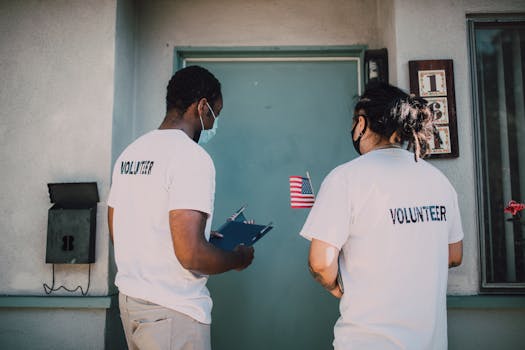
Two volunteers wear masks and visit community homes, engaging in outreach activities. Photo: RDNE Stock project / Pexels
Once you have a clear understanding of your organization and have identified a suitable funder, the real work of crafting the grant proposal begins. A standard grant proposal typically includes several key sections, each serving a distinct purpose in building a compelling case for support. While specific requirements may vary between funders, the core components remain largely consistent. Starting with an executive summary, this crucial section acts as a concise overview of your entire proposal. It should capture the reader's attention immediately, summarizing the problem, your proposed solution, the anticipated impact, and the amount of funding requested. Think of it as an elevator pitch for your entire project – it needs to be impactful enough to make the funder want to read on. The Statement of Need is arguably the most critical section. Here, you meticulously describe the problem your project addresses, providing compelling data, statistics, and anecdotal evidence to underscore its urgency and significance. This isn't just about stating a problem; it's about demonstrating a deep understanding of the issue, its root causes, and its impact on the community or target population. Use credible sources and avoid jargon where possible. This section must evoke empathy and convince the funder that the problem is real, significant, and warrants their investment. It sets the stage for your proposed solution by clearly defining what needs to be fixed. Following the need, the Project Description or Program Plan outlines your proposed solution in detail. This section describes what you will do, how you will do it, and why your approach is effective. Break down your project into specific goals, objectives, activities, and a timeline. Goals are broad statements of desired change, while objectives are specific, measurable, achievable, relevant, and time-bound (SMART). Detail the activities that will lead to these objectives, including who will be responsible and what resources will be used. A clear, logical flow here demonstrates your organization's capacity for strategic planning and execution. This is where you paint a vivid picture of your project in action. Finally, the Evaluation Plan and Budget are crucial for demonstrating accountability and fiscal responsibility. The Evaluation Plan describes how you will measure your project's success. What metrics will you use? How will you collect data? How will you report on outcomes? Funders want to know that their investment will lead to tangible, measurable results. A robust evaluation plan shows your commitment to impact and learning. The Budget section provides a detailed breakdown of all project expenses, justifying each line item. It should be realistic, accurate, and directly align with the activities outlined in your project description. Include both requested funds and any in-kind contributions or leveraged resources. Transparency and accuracy in your budget are paramount, as this section often undergoes close scrutiny by grant reviewers. Together, these core components form a persuasive narrative that transforms your vision into a fundable reality.

Beyond the Basics: Enhancing Your Grant Proposal's Impact

Dedicated volunteers sorting donation boxes indoors for community support. Photo: Gustavo Fring / Pexels
While the core components of a grant proposal are essential, truly successful applications go beyond merely ticking boxes. They incorporate elements that enhance their impact, making them stand out in a competitive funding landscape. One such element is the organizational capacity section. This is where you showcase your nonprofit's ability to successfully implement the proposed project. Detail your organization's history, mission, and track record of success. Highlight key staff members, their qualifications, and relevant experience. Include information about your board of directors, volunteers, and any community partnerships that strengthen your work. Funders want to invest in stable, well-managed organizations with a proven ability to deliver on their promises. Providing evidence of strong leadership, sound financial management, and effective program delivery instills confidence in your capacity to achieve the proposed outcomes. This section is your opportunity to demonstrate why your organization is the right choice to receive their investment, making a strong case for effective nonprofit management. Another powerful enhancement is the use of compelling narratives and testimonials. While data and statistics are crucial for demonstrating need and impact, human stories resonate on a deeper level. Incorporate brief, impactful anecdotes or quotes from beneficiaries, staff, or community members that illustrate the problem you're addressing and the positive change your organization facilitates. These stories breathe life into your proposal, making the abstract feel concrete and connecting the funder emotionally to your mission. Ensure these stories are authentic, respectful, and directly relevant to the project you're proposing. They should complement, not replace, your data-driven arguments. Sustainability is an increasingly important factor for funders. They are not just interested in funding a one-off project; they want to see that your initiatives have the potential for long-term impact beyond the grant period. In your proposal, address how your project will continue to operate, or how its positive effects will endure, after the grant funds are expended. This might involve outlining plans for diversifying funding sources, building community partnerships, developing earned income strategies, or integrating the project into existing organizational structures. Demonstrating a clear vision for sustainability assures funders that their investment will have lasting value and that your organization is thinking strategically about its future. Finally, impeccable presentation and adherence to guidelines are non-negotiable. A sloppy proposal, rife with typos, grammatical errors, or formatting inconsistencies, immediately undermines your credibility. Proofread meticulously, and ideally, have multiple people review the document. Pay close attention to all funder guidelines regarding page limits, font sizes, required attachments, and submission methods. Failing to follow instructions can lead to immediate disqualification, regardless of the quality of your content. A polished, professional proposal reflects your organization's attention to detail and respect for the funder's time and process. These enhancements, when combined with a strong core, elevate your grant proposal from good to truly exceptional.

Essential Tips and Common Mistakes to Avoid in Grant Writing

Group of volunteers smiling while sorting donation boxes indoors for a charity organization. Photo: Gustavo Fring / Pexels
Mastering how to write a grant proposal for nonprofits involves not only understanding what to include but also knowing what pitfalls to avoid. Here are some essential tips and common mistakes that can make or break your application. **Essential Tips for Success:** * **Start Early:** Grant writing is a time-consuming process. Give yourself ample time for research, drafting, collaboration, and review. Rushing leads to errors and incomplete proposals. * **Read the Guidelines Carefully:** This cannot be stressed enough. Every funder has unique requirements. Failing to follow them precisely is the quickest way to get rejected. * **Be Specific and Concise:** Avoid jargon and vague language. Clearly articulate your problem, solution, and expected outcomes. Use active voice and strong verbs. * **Align with Funder Priorities:** Tailor each proposal to the specific funder. Highlight how your project directly addresses their stated mission and funding areas. * **Use Data and Evidence:** Support all claims with credible statistics, research, and data. This adds weight and objectivity to your statement of need and anticipated impact. * **Tell a Compelling Story:** While data is crucial, humanizing your mission through brief, impactful anecdotes can create a powerful emotional connection. * **Develop a Realistic Budget:** Your budget must be detailed, justifiable, and align directly with your project activities. Don't inflate or underestimate costs. * **Demonstrate Sustainability:** Show how your project's impact will continue beyond the grant period. Funders prefer to invest in long-term solutions. * **Proofread Meticulously:** Errors in grammar, spelling, or formatting undermine your professionalism. Have multiple people review your proposal. * **Build Relationships:** If possible, connect with program officers before submitting. A brief conversation can provide invaluable insights into their priorities. **Common Mistakes to Avoid:** * **One-Size-Fits-All Proposals:** Submitting generic proposals to multiple funders without tailoring them is a recipe for rejection. * **Lack of Clarity:** Vague language, undefined acronyms, or an unclear project plan will confuse reviewers. * **Underestimating the Need:** Failing to adequately demonstrate the severity and scope of the problem your project addresses. * **Overpromising Results:** Setting unrealistic goals or outcomes can damage your credibility. * **Ignoring Funder Guidelines:** This is a fatal error. Always adhere to page limits, formatting, and required attachments. * **Weak Evaluation Plan:** Not clearly outlining how you will measure success and report on outcomes. * **Unrealistic or Unjustified Budget:** A budget that doesn't align with project activities or includes unexplained costs. * **Poor Writing and Grammar:** A proposal riddled with errors indicates a lack of attention to detail and professionalism. * **Last-Minute Submissions:** Technical glitches can happen. Submitting at the eleventh hour is risky. * **Failure to Follow Up (Appropriately):** While persistent badgering is unwelcome, a polite follow-up after a reasonable period can be appropriate if no timeframe for response was given.

Comparison

AspectWinning ProposalCommon Pitfall 1Common Pitfall 2
Funder AlignmentPrecisely tailored to funder's missionGeneric, one-size-fits-allMismatch with funder priorities
Statement of NeedData-driven, compelling, urgentVague, anecdotal only, lacks dataProblem not clearly defined
Project PlanSMART objectives, detailed activitiesBroad goals, unclear methodsNo clear timeline or responsibilities
BudgetDetailed, justified, realisticInflated or underestimated costsDoesn't align with activities
EvaluationMeasurable outcomes, clear metricsNo plan for measuring impactVague, unquantifiable results
Proofreading✓ Impeccable, error-free✗ Numerous typos/grammar errors✗ Formatting inconsistencies

What Readers Say

"This guide on how to write a grant proposal for nonprofits was incredibly thorough. It demystified the entire process, from research to submission, and helped our small charity secure its first major grant."

Sarah Chen · Austin, TX

"As a new grant writer, I felt overwhelmed. This article broke down how to write a grant proposal for nonprofits into manageable steps, making it much less daunting and significantly improving my proposals."

David Ramirez · Chicago, IL

"Following the advice on tailoring our proposals and focusing on the 'Statement of Need' led to a 50% increase in our grant success rate last quarter. This resource is invaluable for anyone learning how to write a grant proposal for nonprofits."

Maria Rodriguez · Miami, FL

"The section on common mistakes was particularly helpful. While some parts felt familiar, the emphasis on sustainability and building funder relationships provided fresh insights I hadn't considered deeply before."

Ethan White · Seattle, WA

"Even with years of experience, this guide offered valuable reminders and reinforced best practices for how to write a grant proposal for nonprofits. The detailed breakdown of budget justification was particularly useful for refining our approach."

Jessica Lee · Denver, CO

Frequently Asked Questions

What is the most crucial part of how to write a grant proposal for nonprofits?

While all sections are important, the 'Statement of Need' is arguably the most crucial. It must compellingly articulate the problem your project addresses, using data and evidence to convince the funder that there is a significant, urgent need that your organization is uniquely equipped to solve. If the need isn't clearly established, the rest of the proposal will likely fall flat.

Do I need prior experience to write a successful grant proposal?

No, you don't necessarily need prior experience, but you do need dedication and a willingness to learn. This guide provides a comprehensive framework. Many successful grant writers started with no formal background, honing their skills through practice, feedback, and continuous learning. Focus on clear communication and meticulous research.

How do I find grant opportunities that are a good fit for my nonprofit?

Start by researching online databases like Foundation Directory Online, GrantStation, or Candid. Also, check government agency websites (e.g., Grants.gov for federal grants) and corporate giving pages. Look for funders whose mission, geographic focus, and program areas align directly with your nonprofit's work to maximize your chances of success. Review their past giving history.

How much does it cost to write a grant proposal?

The direct monetary cost for writing a grant proposal is often minimal (time, software, printing). However, the significant cost is in staff time and resources. If hiring a professional grant writer, fees can range from hourly rates ($50-$150+) to project-based fees ($500-$5,000+ per proposal), or even commission-based (less common and ethically debated). Consider the potential return on investment.

Is grant writing more effective than other fundraising methods for nonprofits?

Grant writing is one highly effective fundraising method, particularly for specific projects or operational support, as it provides non-dilutive funding. However, a diversified fundraising strategy including individual donors, corporate sponsorships, events, and earned income is generally most robust. Grants complement other efforts rather than replacing them entirely, offering stability and project-specific support.

Who within a nonprofit should be involved in writing a grant proposal?

Ideally, grant proposal development is a collaborative effort. Key individuals include program staff (for project details), finance staff (for budget development), executive leadership (for organizational vision and sign-off), and a dedicated grant writer or development professional (to manage the process and craft the narrative). This ensures accuracy, completeness, and alignment with organizational goals.

What are the risks of relying too heavily on grant funding?

Over-reliance on grant funding can create financial instability due to unpredictable funding cycles, shifting funder priorities, and fierce competition. It can also lead to 'mission creep' where organizations adapt their programs to fit funder requirements rather than their core mission. Diversifying funding sources is crucial for long-term sustainability and organizational independence.

How will AI impact how to write a grant proposal for nonprofits in the future?

AI is likely to streamline various aspects of grant writing, such as initial research, drafting boilerplate sections, summarizing reports, and identifying funding matches. However, the human element of storytelling, strategic alignment, relationship building, and nuanced understanding of community needs will remain critical. AI will be a powerful tool to enhance efficiency, not a replacement for human expertise and empathy in crafting compelling proposals.

Mastering how to write a grant proposal for nonprofits is an invaluable skill that can transform your organization's ability to achieve its mission. By following the comprehensive strategies outlined in this guide, you can craft compelling, funder-centric proposals that secure the vital resources needed to make a profound difference in your community. Start applying these principles today and unlock new opportunities for impact.

Topics: how to write a grant proposal for nonprofitsnonprofit grant writinggrant application tipssecuring nonprofit fundinggrant proposal best practices
Leo List
Brampton weed
Adultwork EstrelaBet Vai de Bet R7 Bet Betão Galera Bet Rainbet Bet9ja Shop SportyBet BetKing Sisal Loto Foot Hollywoodbets YesPlay Odibets RushBet Jugabet BetWarrior BetCity MSport betPawa Fortebet