
Starting a Nonprofit Checklist US: Your Definitive Guide
starting a nonprofit checklist US

Starting a Nonprofit Checklist US: Your Definitive Guide

Unlock your mission's potential with this step-by-step guide to establishing a successful nonprofit in the United States.

Start Your Nonprofit Journey

Key Takeaways

  • ✓ Over 1.5 million active nonprofits in the US.
  • ✓ Forming a 501(c)(3) offers tax-exempt status and donor benefits.
  • ✓ State-level registration precedes federal IRS application.
  • ✓ Strong governance and financial transparency are crucial from day one.

How It Works

1
Define Your Mission & Vision

Clearly articulate the problem your nonprofit will solve and your long-term aspirations. This foundational step guides all subsequent decisions and helps attract passionate supporters.

2
Assemble Your Board of Directors

Recruit a diverse, committed group of individuals who bring valuable skills, networks, and dedication to your cause. A strong board is vital for governance and strategic direction.

3
Complete State-Level Registration

File articles of incorporation with your chosen state to establish your legal entity. This officially recognizes your organization as a corporation in your state.

4
Apply for 501(c)(3) Status

Submit Form 1023 to the IRS to obtain federal tax-exempt status. This crucial step allows your organization to receive tax-deductible donations and grants.

Laying the Groundwork: Vision, Mission, and Governance for US Nonprofits

A multicultural group of professionals engaged in a business meeting in a modern conference room. Photo: Werner Pfennig / Pexels
Embarking on the journey of starting a nonprofit in the US requires more than just a good idea; it demands meticulous planning, a clear vision, and a robust organizational structure from the outset. Before diving into the legal intricacies, the very first and most critical step is to solidify your organization's foundational elements. This involves clearly defining your mission, vision, and values, which will serve as the guiding principles for every decision and action your nonprofit undertakes. Your mission statement should be a concise, powerful declaration of your organization's purpose, outlining what you do, for whom, and why. The vision statement, on the other hand, paints a picture of the future you aspire to create, illustrating the ultimate impact of your work. Together, these statements not only inspire your team and beneficiaries but also communicate your core identity to potential donors, partners, and the public. Once your mission and vision are crystallized, the next crucial step is to establish your board of directors. The board is the legal governing body of your nonprofit, responsible for strategic planning, financial oversight, and ensuring the organization adheres to its mission. Selecting the right individuals for your board is paramount. Look for a diverse group that brings a variety of skills, experiences, and perspectives – including legal, financial, marketing, fundraising, and programmatic expertise. A strong board should be passionate about your cause, committed to ethical governance, and willing to actively participate in fundraising and advocacy efforts. Their collective wisdom and networks will be invaluable as you navigate the challenges and opportunities of the nonprofit sector. It's advisable to start with at least three unrelated individuals for your initial board, though many states recommend five or more. Clearly defined roles, responsibilities, and a robust conflict of interest policy are essential for effective board functioning. This foundational work ensures that your nonprofit has a strong ethical and strategic compass as it begins its vital work in the community. Understanding the nuances of nonprofit governance is essential for long-term success and compliance.

Navigating State and Federal Legal Requirements for Nonprofit Formation

Hands signing a contract with a blue pen, close-up view. Photo: Kindel Media / Pexels
With your foundational elements in place, the next phase in starting a nonprofit checklist US involves navigating the labyrinth of state and federal legal requirements. This is where your vision truly begins to take legal shape. The journey typically starts at the state level. You must file Articles of Incorporation (or a similar document, depending on your state) with your chosen state's Secretary of State or equivalent agency. This formalizes your organization as a legal entity and is a prerequisite for almost all subsequent steps. The Articles of Incorporation typically include your nonprofit's name, purpose, the names and addresses of initial board members, and a statement that the organization is organized for charitable, educational, scientific, or religious purposes. It's crucial that this document includes specific language required by the IRS for 501(c)(3) eligibility, such as a dissolution clause specifying that assets will be distributed to another 501(c)(3) organization upon dissolution. Simultaneously, or shortly after incorporation, you'll need to develop your organization's bylaws. Bylaws are the internal operating rules for your nonprofit, detailing everything from board member terms and election procedures to meeting protocols and financial management policies. They are a critical document that outlines how your organization will function and ensures good governance. While bylaws are not typically filed with the state, they are essential for your internal operations and will be requested by the IRS during the 501(c)(3) application process. Following state incorporation, you'll obtain an Employer Identification Number (EIN) from the IRS, which is like a social security number for your organization. This 9-digit number is required for opening bank accounts, filing tax returns, and hiring employees. Only after completing these state-level actions and securing an EIN can you proceed to the federal application for tax-exempt status, which is often the most complex part of the process. This meticulous adherence to legal steps ensures your organization is legitimate and poised for impact.

Achieving 501(c)(3) Status and Ongoing Compliance
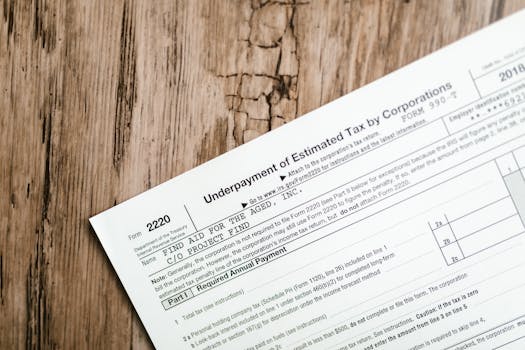
Close-up of a corporate tax form on a textured wooden surface, highlighting document details. Photo: RDNE Stock project / Pexels
The cornerstone of starting a nonprofit checklist US for many organizations is securing 501(c)(3) status from the Internal Revenue Service (IRS). This federal designation is what allows your nonprofit to be exempt from federal income tax and, crucially, permits donors to deduct their contributions from their own taxable income. The primary vehicle for this is Form 1023, Application for Recognition of Exemption Under Section 501(c)(3) of the Internal Revenue Code. This is a comprehensive and often lengthy application that requires detailed information about your organization's mission, activities, financial data (actual and projected), governance structure, and compensation policies. It's imperative that your Articles of Incorporation and bylaws are consistent with 501(c)(3) requirements, as the IRS will scrutinize these documents carefully. For smaller nonprofits with projected gross receipts of less than $50,000 annually and assets less than $250,000, there is a streamlined version, Form 1023-EZ, which can significantly expedite the process, though not all organizations qualify. Understanding the nuances of nonprofit funding often starts with this critical tax-exempt status. Once 501(c)(3) status is granted, the work of compliance doesn't end; it begins. Nonprofits must adhere to ongoing federal and state regulations. Federally, this includes filing an annual information return with the IRS (Form 990, 990-EZ, or 990-N, depending on gross receipts). Failure to file for three consecutive years can lead to automatic revocation of tax-exempt status. Beyond federal requirements, most states have their own annual registration and reporting requirements, especially for organizations that solicit charitable contributions. These often involve registering with the state's Attorney General or Secretary of State office. Some states also require specific disclosures for fundraising activities. Additionally, if your nonprofit plans to hire employees, you'll need to comply with federal and state employment laws, including obtaining workers' compensation insurance and setting up payroll tax accounts. Maintaining meticulous records, staying informed about regulatory changes, and potentially engaging legal and accounting professionals are vital for long-term compliance and the sustained impact of your mission. This diligence ensures your nonprofit remains in good standing and continues its important work without interruption.

Key Operational Considerations and Common Pitfalls to Avoid

Smiling volunteer woman carrying aid boxes for a charity event. Photo: RDNE Stock project / Pexels
Beyond the legal and structural requirements, successfully starting a nonprofit in the US involves crucial operational considerations that can make or break your organization. Developing a robust fundraising strategy is paramount. While 501(c)(3) status opens doors to grants and tax-deductible donations, actively cultivating relationships with individual donors, foundations, and corporate sponsors is essential for sustainable funding. This involves crafting compelling grant proposals, organizing fundraising events, and building a strong case for support that resonates with potential funders. A well-defined budget is also critical, outlining anticipated income and expenses to ensure financial stability and transparency. Another vital operational aspect is establishing clear accounting and financial management systems. This includes setting up a dedicated bank account, implementing internal controls to prevent fraud, and maintaining accurate financial records. Transparency in financial reporting is not just a legal requirement but also builds trust with donors and the public. **Common Pitfalls to Avoid:** * **Lack of a Clear Mission:** Without a focused mission, your efforts can become diluted, and your impact diminished. Ensure your mission is specific, measurable, achievable, relevant, and time-bound (SMART). * **Inadequate Board Engagement:** A disengaged board can cripple a nonprofit. Recruit active members and provide clear expectations, training, and opportunities for meaningful contribution. * **Ignoring State-Level Compliance:** Many new nonprofits focus solely on 501(c)(3) but overlook state charity registrations and annual reporting, leading to penalties and loss of good standing. * **Insufficient Funding Strategy:** Relying on a single funding source or having no proactive fundraising plan is a recipe for instability. Diversify your revenue streams. * **Poor Financial Management:** Lack of proper accounting, budgeting, and internal controls can lead to mismanagement, legal issues, and loss of public trust. * **Underestimating Time Commitment:** Starting and running a nonprofit is demanding. Be prepared for significant time and effort, especially in the initial years. * **Failure to Document Everything:** Keep meticulous records of all board meetings, financial transactions, policies, and communications. This is crucial for compliance and transparency. By proactively addressing these operational elements and sidestepping common pitfalls, your nonprofit will be better positioned for sustained impact and long-term success in its mission.

Comparison

FeatureForm 1023 (Long Form)Form 1023-EZ (Streamlined)State Incorporation Only
EligibilityMost nonprofitsGross receipts <$50k & assets <$250kAny legal entity
IRS Review Time6-12+ months1-3 monthsN/A
ComplexityHighLowMedium
Federal Tax Exemption
Donor Deductibility
Cost (IRS Fee)$600 or $275$275N/A
Annual IRS FilingForm 990 SeriesForm 990 SeriesN/A

What Readers Say

"This starting a nonprofit checklist US was incredibly thorough and broke down complex steps into manageable tasks. It saved me countless hours of research and helped me feel confident in each phase of our 501(c)(3) application."

Sarah J. · Austin, TX

"As a first-time founder, I felt overwhelmed. This checklist provided a clear roadmap, from defining our mission to understanding state registrations. Highly recommend for anyone serious about making an impact."

Michael D. · Chicago, IL

"Using this guide, our medical research nonprofit successfully secured 501(c)(3) status in less than six months. The detailed advice on bylaws and IRS forms was invaluable, leading to immediate grant eligibility."

Dr. Emily R. · Boston, MA

"While extremely helpful, a few sections could benefit from even more state-specific examples, as California's requirements are quite unique. Still, an excellent resource for general guidance on starting a nonprofit in the US."

David L. · San Francisco, CA

"Our community outreach program used this checklist and found it indispensable for navigating the legalities. It clarified what seemed like daunting paperwork and helped us focus on our program delivery faster."

Maria P. · Miami, FL

Frequently Asked Questions

What is the very first step in starting a nonprofit checklist US?

The absolute first step is to define your organization's mission and vision. This foundational work clarifies your purpose, identifies the problem you aim to solve, and articulates the impact you wish to achieve. A clear mission guides all subsequent decisions and is crucial for attracting board members, donors, and volunteers.

Is it mandatory to get 501(c)(3) status for a nonprofit?

While not strictly mandatory to operate as a legal entity (you can incorporate as a nonprofit at the state level), obtaining 501(c)(3) status from the IRS is highly recommended. It grants federal tax exemption and allows donors to make tax-deductible contributions, which is critical for fundraising and long-term sustainability.

How do I find board members for my new nonprofit?

Start by identifying individuals who are passionate about your cause and possess skills vital for governance, such as legal, financial, marketing, or programmatic expertise. Leverage your personal network, professional associations, and community groups. Look for diversity in backgrounds and perspectives to ensure comprehensive oversight and strategic guidance.

What are the approximate costs involved in starting a nonprofit in the US?

Costs can vary significantly but generally include state incorporation fees (ranging from $50-$300+), IRS application fees for 501(c)(3) status ($275 for Form 1023-EZ or $600 for Form 1023), and potential legal or accounting fees for assistance with filings and bylaws. Budgeting for initial operational expenses is also crucial.

What's the difference between a nonprofit and a 501(c)(3)?

A 'nonprofit' refers to an organization that uses its surplus revenues to achieve its goals rather than distributing them as profit or dividends. A '501(c)(3)' is a specific designation granted by the IRS to certain types of nonprofits (charitable, educational, religious, etc.) that makes them exempt from federal income tax and allows for tax-deductible donations.

Who should use a starting a nonprofit checklist US?

Anyone aspiring to establish a formal charitable, educational, religious, or scientific organization in the United States should use this checklist. It is particularly valuable for first-time founders, community leaders, and groups looking to formalize their impact and secure tax-exempt status.

What are the risks of not following this checklist carefully?

Failing to follow a comprehensive checklist can lead to significant risks, including rejection of 501(c)(3) status, legal non-compliance with state or federal regulations, financial penalties, loss of public trust, and ultimately, the inability to effectively pursue your mission. Proper adherence ensures legal standing and operational integrity.

How will technology impact the future of starting a nonprofit?

Technology will continue to streamline the nonprofit formation process, with more online filing options, AI-powered compliance tools, and digital platforms for donor engagement and volunteer management. It will also empower new models of distributed leadership and more efficient impact measurement, making it easier for founders to launch and scale their missions.

Armed with this comprehensive starting a nonprofit checklist US, you are now equipped to transform your passion into a powerful force for good. Take the first step today to build an organization that creates lasting positive change in your community and beyond.

Topics: starting a nonprofit checklist UShow to start a nonprofitnonprofit formation US501(c)(3) applicationnonprofit legal requirements
Leo List
Brampton weed
Adultwork