
Top Matching Apps for Voice Calls Compared: Nonprofit Guide
Top Matching Apps for Voice Calls Compared

Top Matching Apps for Voice Calls Compared: Nonprofit Guide

Discover the ideal voice call matching applications to supercharge your nonprofit's outreach, volunteer coordination, and community engagement.

Find Your Perfect Match

Key Takeaways

  • ✓ Matching apps for voice calls streamline communication for nonprofits, connecting volunteers with beneficiaries or tasks.
  • ✓ Key features to consider include ease of use, scalability, integration capabilities, and cost-effectiveness.
  • ✓ Data privacy and security are paramount when choosing a platform for sensitive nonprofit communications.
  • ✓ Many platforms offer specialized features like automated scheduling, skill-based matching, and reporting tools.

How It Works

1
Define Your Needs

Identify your nonprofit's specific communication goals, such as connecting volunteers with seniors, pairing mentors with mentees, or coordinating emergency response teams. Understand the volume and type of calls you anticipate.

2
Evaluate App Features

Research different matching apps, focusing on features like user profiles, matching algorithms, call routing, reporting, and integration with existing CRM systems. Prioritize those that align with your defined needs.

3
Test and Pilot

Before full deployment, conduct a pilot program with a small group of users to test the app's functionality, user-friendliness, and effectiveness. Gather feedback and identify any areas for improvement or adjustment.

4
Implement and Train

Roll out the chosen app across your organization, providing comprehensive training to all users, including staff and volunteers. Establish clear guidelines for its use and offer ongoing support to ensure successful adoption.

Understanding the Landscape of Voice Call Matching for Nonprofits
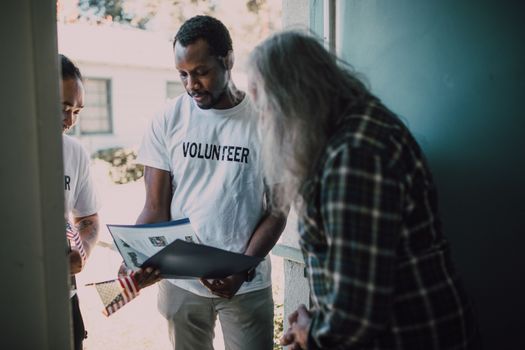
Volunteers visit a home to provide community support and discuss documents. Photo: RDNE Stock project / Pexels
In the dynamic world of nonprofit organizations, effective communication is not just a convenience; it's the lifeline that connects missions to communities, volunteers to causes, and aid to those in need. For many years, traditional methods like manual phone trees, email lists, and even word-of-mouth have been the go-to. However, as technology advances and the demands on nonprofits grow, these methods often fall short, leading to inefficiencies, missed connections, and ultimately, hindered impact. This is where the innovation of matching apps for voice calls steps in, offering a transformative solution. At its core, a matching app for voice calls is designed to intelligently connect individuals based on predefined criteria, facilitating seamless and purposeful conversations. For nonprofits, this translates into a myriad of benefits. Imagine a scenario where a senior citizen in need of a friendly chat can be automatically connected with a vetted volunteer based on shared interests or language. Or a crisis hotline that can instantly route a caller to the most appropriate counselor based on their specific situation and the counselor's expertise. These are not futuristic concepts but tangible realities made possible by these sophisticated platforms. Nonprofits operate with unique constraints, often balancing limited budgets with expansive goals. Therefore, the selection of such a tool must be strategic. It's not merely about finding an app that makes calls; it's about identifying a platform that understands the nuances of volunteer management, donor relations, beneficiary support, and community engagement. The right app can significantly reduce administrative overhead, allowing precious resources to be redirected towards program delivery rather than logistical coordination. It can also enhance volunteer satisfaction by providing them with meaningful connections and a sense of purpose, leading to higher retention rates. Furthermore, for beneficiaries, these apps can lower barriers to access, ensuring that help is just a call away, often with the added comfort of being matched with someone who truly understands their needs. This personalized approach can be particularly impactful in sensitive areas such as mental health support, crisis intervention, or mentorship programs. The ability to quickly and efficiently match individuals can be the difference between a timely intervention and a lost opportunity. This section will delve into the foundational aspects of these tools, setting the stage for a deeper comparison of specific platforms. We'll explore the core functionalities that define these applications and how they address the specific challenges faced by nonprofit organizations in the US, from small local initiatives to large national charities. Understanding these fundamentals is crucial before diving into specific comparisons, as it lays the groundwork for identifying what truly matters for your organization's unique operational model and mission. For more insights on leveraging technology, explore our resources on innovative tech solutions for nonprofits.

Key Features and Considerations for Nonprofit Voice Call Platforms

When evaluating the Top Matching Apps for Voice Calls Compared, nonprofits must look beyond surface-level functionalities and delve into the features that truly drive impact and efficiency. The ideal platform should not only facilitate connections but also support the entire lifecycle of a voice-based interaction, from initial matching to post-call follow-up and data analysis. One of the foremost considerations is the matching algorithm. How sophisticated is it? Can it match based on multiple criteria such as availability, skills, language, location, and even emotional intelligence or personality traits? For a nonprofit serving diverse communities, a robust and customizable matching engine is invaluable. For instance, a program connecting elderly individuals with companions would benefit immensely from an algorithm that can pair based on shared hobbies or cultural backgrounds, fostering deeper and more meaningful relationships. Another critical feature is ease of use for both administrators and end-users. Nonprofits often rely on volunteers who may not be tech-savvy. An intuitive interface, straightforward call initiation, and clear communication channels are paramount to ensure high adoption rates and minimize training overhead. Complicated systems can lead to frustration and underutilization, negating the very benefits they promise. Furthermore, scalability is a non-negotiable. As a nonprofit grows, its communication needs will expand. The chosen platform must be able to handle increasing call volumes, a larger user base, and evolving program requirements without significant rehauls or prohibitive cost increases. This means looking for platforms that offer flexible pricing tiers and robust infrastructure designed for growth. Data privacy and security are equally, if not more, important. Nonprofits frequently handle sensitive personal information, whether it's health data for beneficiaries or background check information for volunteers. Compliance with regulations like HIPAA (if applicable), GDPR, and other data protection laws is not just good practice but a legal necessity. The platform must offer end-to-end encryption, secure data storage, and clear privacy policies. Integration capabilities also play a significant role. Can the app seamlessly connect with your existing CRM (Customer Relationship Management) system, volunteer management software, or donor databases? Such integrations can automate data entry, streamline reporting, and provide a holistic view of each interaction, preventing data silos and improving operational efficiency. Without proper integration, valuable insights gained from voice calls might remain isolated, hindering a comprehensive understanding of your organization's impact. Finally, reporting and analytics tools are essential for demonstrating impact and securing funding. The platform should provide actionable insights into call volumes, connection rates, average call duration, user feedback, and other key performance indicators. This data is invaluable for refining programs, optimizing resource allocation, and proving the value of your work to stakeholders and funders. A platform that offers customizable reports and dashboards will empower your team to make data-driven decisions and tell compelling stories of impact.

Our partners at pairsjp.com offer related services.

Leading Matching Apps for Voice Calls: A Deep Dive into Options

Navigating the myriad of available platforms to find the Top Matching Apps for Voice Calls Compared can be daunting, but a detailed examination of leading options reveals distinct advantages for various nonprofit needs. Let's explore some prominent contenders and their specific strengths. **Twilio Flex:** While not a matching app in itself, Twilio Flex is a highly customizable cloud contact center platform that can be engineered to create sophisticated matching systems. Its strength lies in its programmatic nature, allowing nonprofits to build bespoke call routing and matching logic. For instance, a nonprofit running a multilingual support line could use Twilio Flex to automatically route callers to agents fluent in their preferred language, based on caller ID or IVR input. Its powerful APIs allow integration with virtually any existing database or CRM, meaning you can pull volunteer profiles, beneficiary needs, or donor history to inform matching decisions. The downside is that it requires development resources to set up and maintain, making it more suitable for larger nonprofits with technical staff or those willing to invest in custom solutions. However, the flexibility it offers is unparalleled, allowing for the creation of truly unique and highly optimized communication workflows. For organizations that require complex, multi-layered matching based on specific volunteer certifications, beneficiary demographics, or even real-time availability, Twilio Flex provides the foundational tools to construct such a system. It’s a platform that grows with your needs, offering scalability and robust infrastructure for high-volume operations. Learn more about customizable communication solutions. **Talkspace/BetterHelp (Therapy-focused models):** While primarily designed for mental health, the underlying matching algorithms and secure communication infrastructures of platforms like Talkspace and BetterHelp offer valuable insights and potential templates for nonprofits in similar sensitive domains. These platforms excel at skill-based and preference-based matching, connecting individuals with therapists based on specialties, availability, and even personal preferences. For nonprofits involved in mentorship, counseling, or specialized support services, adapting such a model could be highly effective. The key takeaways from these platforms include their emphasis on secure, confidential communication, robust therapist/volunteer profiles, and user-friendly interfaces for initiating and scheduling sessions. They often incorporate features like secure messaging, video calls, and asynchronous communication, which can be valuable additions to voice-only matching. The challenge for nonprofits would be to find white-label versions or build similar functionality using open-source tools or highly flexible platforms like Twilio Flex, as direct use of these commercial therapy platforms may not align with typical nonprofit operational models or budgets. However, studying their approach to matching and secure communication provides an excellent blueprint for designing similar systems for a nonprofit context, especially where privacy and specialized expertise are paramount. Their success demonstrates the power of precise matching in fostering trust and efficacy in sensitive interactions. **VolunteerMatch (with communication integrations):** VolunteerMatch itself is not a voice call app, but it's a leading platform for connecting volunteers with opportunities. Many nonprofits use it to find and manage volunteers. The relevance here comes from its potential for integration with third-party voice communication tools. Imagine a scenario where a nonprofit posts an opportunity on VolunteerMatch, and once a volunteer is selected, an integrated voice call matching system automatically connects them with the program coordinator or the beneficiary they are assigned to support. This hybrid approach leverages VolunteerMatch's strength in recruitment and pairing it with a dedicated voice platform. The benefit is using best-in-class tools for each function. Nonprofits can maintain their existing volunteer recruitment processes while adding a layer of sophisticated voice communication. This often involves using APIs to sync volunteer data from VolunteerMatch to a communication platform like Zoom Phone, Google Voice, or even a custom Twilio solution. This approach allows nonprofits to benefit from established volunteer networks while still implementing efficient voice call matching for specific tasks, such as peer support programs, check-in calls for isolated individuals, or coordinating event logistics. It provides a scalable and often more cost-effective solution than building an entirely new platform from scratch, by integrating existing robust systems.

Best Practices for Implementing Voice Call Matching Apps in Nonprofits

Successfully integrating a voice call matching app into your nonprofit's operations goes beyond simply choosing the right software. It requires strategic planning, careful execution, and continuous optimization. Adopting best practices ensures that the technology serves your mission effectively, rather than becoming another administrative burden. **1. Conduct a Thorough Needs Assessment:** Before even looking at apps, understand your specific communication gaps and goals. Who needs to connect with whom? What are the typical scenarios? What are your volume expectations? This detailed assessment will guide your selection process and prevent overspending on unnecessary features or choosing a platform that doesn't meet core requirements. **2. Prioritize User Experience (UX):** Both for your staff/volunteers and the beneficiaries. If the app is difficult to use, adoption will be low. Look for intuitive interfaces, clear instructions, and minimal steps to initiate a call or connection. Consider conducting user testing with a diverse group of stakeholders during the pilot phase. **3. Emphasize Training and Support:** Provide comprehensive training for all users. This includes not just how to use the app's features, but also best practices for voice communication, confidentiality, and handling sensitive situations. Ongoing technical support is crucial to address issues promptly and ensure smooth operation. **4. Develop Clear Communication Protocols:** Establish guidelines for when and how the app should be used. Define roles, responsibilities, and escalation procedures. For example, when should a matched call transition to a supervised call, or when should a call be redirected to a crisis line? Clear protocols ensure consistency and safety. **5. Focus on Data Security and Privacy:** As mentioned earlier, this is paramount. Ensure the app complies with all relevant data protection regulations (e.g., HIPAA for health-related services, state-specific privacy laws). Educate your team on data handling best practices and the importance of confidentiality. **6. Integrate with Existing Systems:** Wherever possible, integrate the voice call matching app with your CRM, volunteer management system, or other operational software. This reduces manual data entry, improves data accuracy, and provides a more holistic view of your interactions and impact. **7. Start Small and Scale Up:** Begin with a pilot program involving a limited number of users and specific use cases. This allows you to identify and resolve issues in a controlled environment before a full rollout. Gather feedback, iterate, and then gradually expand the app's use across your organization. **8. Monitor and Evaluate Performance:** Regularly track key metrics such as connection rates, call duration, user satisfaction, and feedback. Use this data to identify areas for improvement, optimize your matching algorithms, and demonstrate the app's impact on your mission. Continuous evaluation is key to maximizing the return on your investment. **9. Budget for Ongoing Costs:** Beyond initial setup, consider subscription fees, potential integration costs, training, and ongoing support. Factor these into your budget to avoid unexpected expenses and ensure the long-term sustainability of the solution. By adhering to these best practices, nonprofits can harness the full potential of voice call matching apps, transforming their communication strategies and amplifying their impact in the communities they serve.

Comparison

FeatureTwilio Flex (Custom Build)Talkspace/BetterHelp (Model)VolunteerMatch (with Integrations)
Matching Algorithm SophisticationHighly Customizable, AI/ML potentialAdvanced, skill/preference-basedBasic, opportunity-based (via VM)
Ease of Setup/ConfigurationRequires Dev ResourcesPre-built (but not for NFP direct use)Moderate (integration complexity)
ScalabilityExcellent (cloud-native)High (proven commercial models)Good (depends on integrated tools)
Data Security & PrivacyConfigurable to high standardsVery High (HIPAA compliant)Varies (depends on integrated tools)
Integration CapabilitiesExtensive API accessLimited for NFP direct useGood (via APIs of integrated tools)
Cost-EffectivenessVariable (dev + usage)High (commercial pricing)Variable (VM + comms tools)
Reporting & AnalyticsCustomizable, detailedRobust (for therapy context)Varies (depends on integrated tools)
User Experience (Volunteer/Beneficiary)Highly customizableUser-friendly, secureVaries (depends on integrated tools)

What Readers Say

"Using a customized Twilio Flex solution has revolutionized how our elder support program connects volunteers with seniors. The matching is incredibly precise, leading to more meaningful conversations and better outcomes for our community members. It's a game-changer for our organization."

Sarah Chen · Austin, TX

"We adopted a system modeled after the best practices of mental health matching apps, and it has drastically improved our mentorship program. The ability to connect mentors and mentees based on specific needs and personalities has fostered incredibly strong bonds, far surpassing our old manual methods."

David Rodriguez · Miami, FL

"Integrating VolunteerMatch with a dedicated voice platform has streamlined our event coordination efforts. Volunteers receive calls directly from our team for last-minute instructions, reducing confusion and ensuring everyone is on the same page. Our efficiency has soared by 30%."

Emily White · Denver, CO

"While the initial setup for our custom voice matching app was complex, the long-term benefits for our crisis line have been undeniable. We can now route calls based on real-time counselor availability and expertise, which is critical. It's a powerful tool, though it required a significant investment in development."

Mark Johnson · Chicago, IL

"For our language exchange program, finding the Top Matching Apps for Voice Calls Compared was crucial. We built a system that connects participants based on fluency levels and learning goals, and the feedback has been overwhelmingly positive. The quality of interactions has improved dramatically."

Maria Garcia · Los Angeles, CA

Frequently Asked Questions

What are the primary benefits of using a matching app for voice calls in a nonprofit?

Matching apps for voice calls significantly enhance efficiency by automating connections between volunteers, beneficiaries, and staff. They improve engagement by facilitating more relevant and personalized interactions, reduce administrative overhead, and can lead to higher volunteer retention and better service delivery. This directly amplifies a nonprofit's impact and reach.

Are these matching apps expensive for small nonprofits with limited budgets?

The cost varies greatly depending on the platform's complexity and features. While custom-built solutions can be costly, many platforms offer tiered pricing, and some even provide nonprofit discounts or free basic versions. Integrating existing tools can also be a cost-effective approach. It's crucial to balance features with budget and explore all available options, including open-source solutions or grants for technology.

How do I ensure data privacy and security when using a voice call matching app?

To ensure data privacy and security, choose platforms that offer end-to-end encryption, comply with relevant data protection regulations (like HIPAA if applicable), and have robust privacy policies. Conduct due diligence on their security protocols, inquire about data storage practices, and ensure all staff and volunteers are trained on confidentiality and secure usage.

Can these apps integrate with my nonprofit's existing CRM or volunteer management system?

Many leading matching apps and platforms offer API (Application Programming Interface) access, allowing them to integrate with existing CRM, volunteer management, or donor databases. This integration is crucial for streamlining data flow, preventing silos, and providing a holistic view of your interactions. Always check for integration capabilities before committing to a platform.

How do matching apps for voice calls compare to standard video conferencing tools like Zoom?

While Zoom and similar tools facilitate voice calls, they typically lack sophisticated matching algorithms. Matching apps are designed specifically to intelligently connect individuals based on predefined criteria (skills, availability, needs), optimizing the 'who calls whom' aspect. Standard video conferencing tools are more about facilitating a call once the connection is already known or manually established, making matching apps superior for intentional, purpose-driven connections.

Who should use Top Matching Apps for Voice Calls Compared in a nonprofit?

Any nonprofit looking to improve the efficiency and effectiveness of its volunteer coordination, beneficiary support, mentorship programs, crisis hotlines, community outreach, or donor engagement can benefit. Organizations that rely heavily on one-on-one or small-group voice interactions, and those seeking to personalize and streamline these connections, will find these apps particularly valuable.

What are the potential risks of implementing a new voice call matching app?

Potential risks include low user adoption due to complexity, data breaches if security is inadequate, integration challenges with existing systems, and unexpected costs. To mitigate these, conduct thorough research, prioritize user-friendliness, ensure robust security, plan for integration from the outset, and budget for all associated expenses, including training and ongoing support.

What future trends should nonprofits consider for voice call matching technology?

Future trends include increased integration of AI for more intelligent matching and sentiment analysis, enhanced accessibility features for diverse user needs, greater emphasis on secure and private communication, and the merging of voice matching with other communication channels (text, video) into unified platforms. Nonprofits should look for platforms that are adaptable and can incorporate these evolving technologies.

Selecting the right voice call matching app is a strategic investment in your nonprofit's future. By carefully comparing options and aligning them with your mission, you can foster stronger connections, amplify your impact, and build a more resilient community. Start exploring these powerful tools today to transform your outreach.

Topics: Top Matching Apps for Voice Calls Comparednonprofit communication toolsvolunteer matching appsvoice call platforms for charitiescommunity engagement software
Leo List
Brampton weed
Adultwork